
 Image 1 of 2
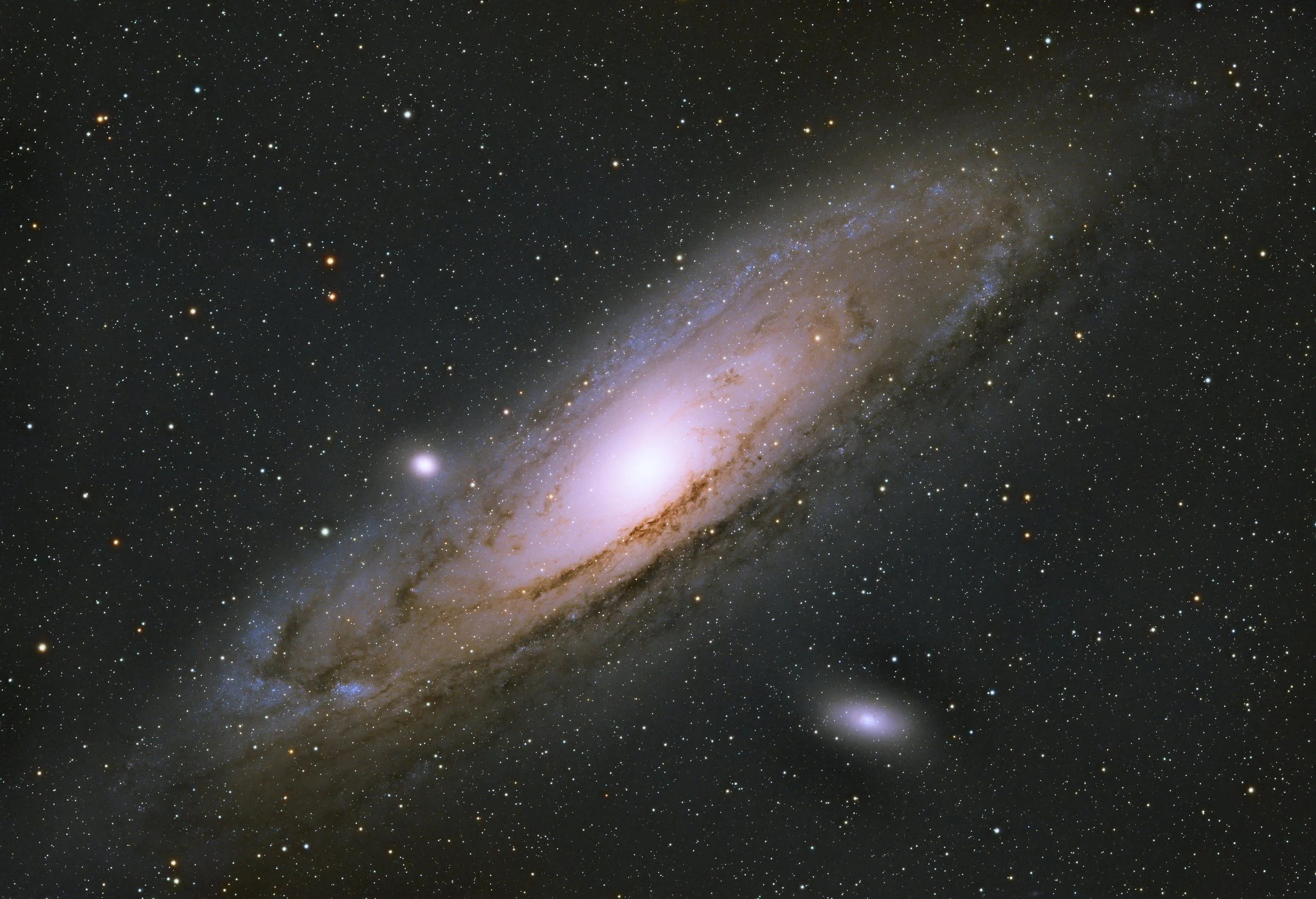 Image 2 of 2
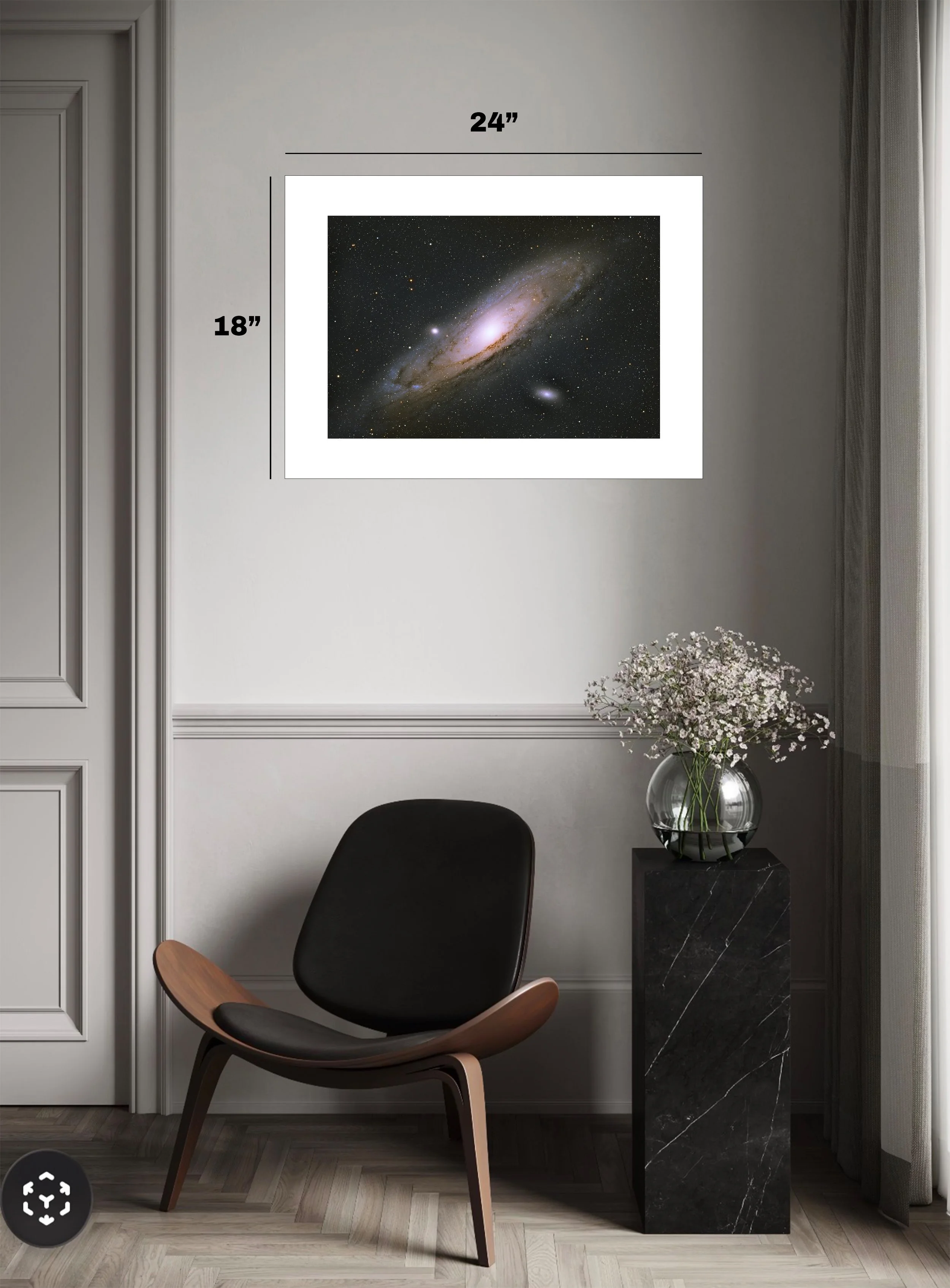
This photo is printed in Landscape style, with the white mat it measures 18×24 inches
Printed photos are significantly higher resolution
Mobile phones may not display the entire picture
The Andromeda Galaxy, also known as M31, is the nearest spiral galaxy to Earth and one of the most studied galaxies in the universe. Located about 2.537 million light-years away in the constellation Andromeda, it is the largest galaxy in our Local Group, which also includes the Milky Way, the Triangulum Galaxy, and about 54 other smaller galaxies. With a diameter of approximately 220,000 light-years, Andromeda contains over a trillion stars, along with vast amounts of gas and dust. Its beautiful spiral structure, visible to the naked eye as a faint smudge of light on clear nights, has fascinated astronomers for centuries. The Andromeda Galaxy is on a collision course with our Milky Way, predicted to merge in about 4.5 billion years, a cosmic event that will reshape both galaxies.
This photo is printed in Landscape style, with the white mat it measures 18×24 inches
Printed photos are significantly higher resolution
Mobile phones may not display the entire picture
The Andromeda Galaxy, also known as M31, is the nearest spiral galaxy to Earth and one of the most studied galaxies in the universe. Located about 2.537 million light-years away in the constellation Andromeda, it is the largest galaxy in our Local Group, which also includes the Milky Way, the Triangulum Galaxy, and about 54 other smaller galaxies. With a diameter of approximately 220,000 light-years, Andromeda contains over a trillion stars, along with vast amounts of gas and dust. Its beautiful spiral structure, visible to the naked eye as a faint smudge of light on clear nights, has fascinated astronomers for centuries. The Andromeda Galaxy is on a collision course with our Milky Way, predicted to merge in about 4.5 billion years, a cosmic event that will reshape both galaxies.